
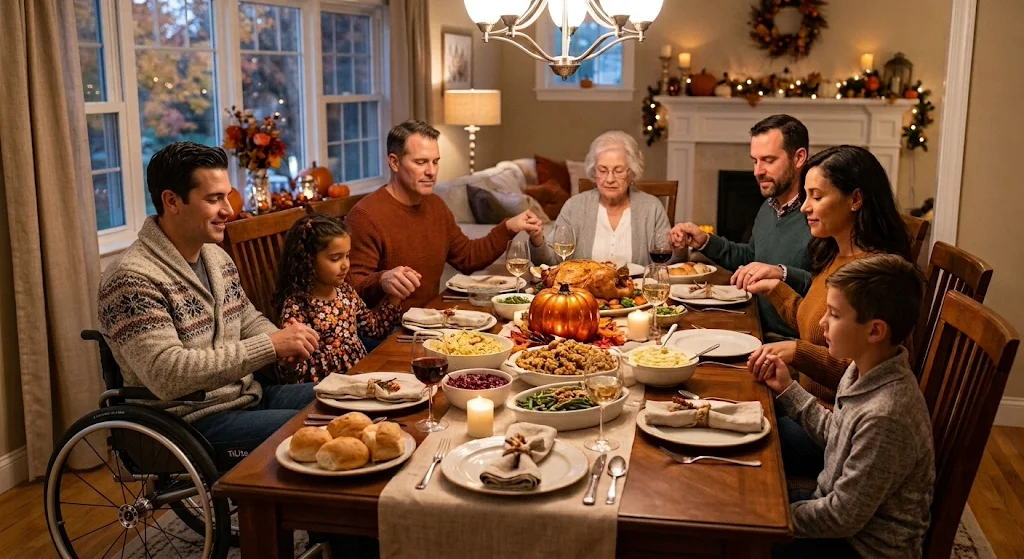
As Thanksgiving approaches, the air fills with the familiar, comforting scents of roasted turkey, spiced pumpkin, and simmering gravies. For many, the holiday season is a cherished time to gather around the table, reflect on the past year, and express gratitude for family, friends, and community. Yet, for individuals living with a spinal cord injury (SCI), the abundance of rich, heavy foods can also bring a wave of hesitation. Navigating autonomic changes, slower bowel motility, weight management, and bladder health requires a thoughtful approach—even during a celebration.
Thankfully, honoring your body and enjoying the festive menu do not have to be mutually exclusive. Shifting the focus toward gratitude for what our bodies can do, rather than viewing holiday meals through a lens of restriction, transforms the dining experience into one of pure celebration.
Savoring the Season with Intention
Healthy holiday eating begins with mindful enjoyment rather than deprivation. Skipping meals earlier in the day to "save calories" for the big feast often backfires, leading to overeating and sluggish digestion. Instead, maintaining a consistent eating schedule with a light, protein-rich breakfast keeps energy levels steady. When it is time to fill your plate, prioritizing lean proteins like white-meat turkey alongside vibrant, fiber-rich vegetables supports muscle maintenance and digestive regularity without sacrificing classic flavors.
If you are looking for fresh culinary inspiration, our YouTube library features an entire collection of healthy, SCI-friendly cooking demonstrations—including festive holiday dishes—to help you prepare nutritious meals with ease. Explore the full video library for step-by-step recipes and adaptive kitchen tips.
Supporting Digestion and Hydration
Because an SCI naturally slows down the gastrointestinal tract, heavy, low-fiber holiday staples can quickly lead to discomfort. Incorporating fiber-dense sides—such as roasted Brussels sprouts, green beans, or sweet potatoes with the skin on—helps keep things moving smoothly. Equally important is staying well-hydrated. Between travel, busy schedules, and the diuretic effects of festive caffeinated or alcoholic beverages, dehydration can sneak up quickly, impacting both bowel programs and bladder health. Alternating celebratory drinks with plenty of water keeps the body balanced and energized.
For an even deeper dive into managing your diet during the holidays and beyond, be sure to catch up on our recent West Coast SCI Alliance webinar on practical nutrition and meal-planning strategies. You can watch the webinar recording to hear expert insights tailored specifically to living well with an SCI.
Focusing on Gratitude and Connection
Ultimately, the heart of Thanksgiving lies in connection rather than the menu itself. Practicing gratitude at the table—whether by sharing a favorite memory from the past year or simply appreciating the company of loved ones—naturally slows down the pace of eating. Taking time to savor each bite allows the brain to register fullness, preventing the discomfort of overindulgence while deepening the joy of the gathering.
By approaching the holiday table with mindfulness, hydration, and a grateful heart, individuals with spinal cord injuries can fully embrace the warmth and flavors of the season while keeping their health on track.
