Ahead of the Class: Head Back to College with these Strategies for Students with SCI
Heading into August and preparing for campus life brings a unique mix of excitement and logistics. Beyond standard accommodations like accessible housing and extended test times, navigating university life with a spinal cord injury requires proactive planning. Expanding your toolkit with strategic, lesser-known approaches can significantly reduce daily friction and build a seamless routine.
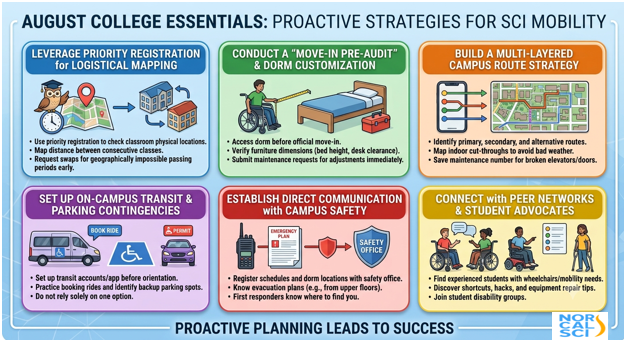
1. Leverage Priority Registration for "Logistical Mapping"
Priority course registration is standard at most colleges, but its greatest value lies in route planning. Once your schedule is set, map out the physical distance between consecutive classes. Campus buildings often feature historical architecture with hidden ramps, secondary elevators, or single-door power actuators that take longer to operate. If a ten-minute passing period is geographically impossible in a wheelchair, contact the disability services office immediately. They may be able to work with the registrar to swap classroom locations for entire courses before the semester begins.
2. Conduct a "Move-In Pre-Audit" and Dorm Customization
Accessible dorm rooms meet legal guidelines, but legal standards do not always align with personal daily routines. Request permission to access your room a few days before official move-in. Check the exact height of the bed frame, test desk clearance with your wheelchair arms, verify shower bench stability, and locate outlet placement relative to charging gear or medical equipment. Submitting maintenance requests for bed adjustments or furniture removal before thousands of students arrive on campus guarantees faster response times from residence life.
3. Build a Multi-Layered Campus Route Strategy
Elevator outages, construction detours, and seasonal weather changes can derail an entire morning. Spend time during the week before classes mapping primary, secondary, and indoor alternative routes. Identify interconnected buildings that allow you to cross campus indoors during severe weather or high-heat August days. Additionally, save the facility maintenance emergency hotline on your phone to report broken door openers or stalled elevators directly.
4. Set Up On-Campus Transit and Parking Contingencies
If you plan to use campus-run accessible shuttles, establish your account and practice booking rides before orientation week. Campus transit services experience heavy demand during peak class hours. If you drive, identify backup accessible parking spaces near your primary academic hubs, as designated spots often fill quickly during morning arrival hours.
5. Establish Direct Communication with Campus Safety
In emergency scenarios like power outages or building alarms, elevators shut down instantly. Registering your daily class schedule, office hours, and dorm room number with the campus public safety office ensures first responders possess precise location details in an emergency. Discuss specific evacuation plans for upper floors with your course instructors during the first week of class.
6. Connect with Peer Networks and Student Advocates
While administrative staff provide formal accommodations, upperclassmen who use wheelchairs offer invaluable real-world knowledge. Reach out to student disability advocacy groups or local spinal cord injury networks to discover practical shortcuts, accessible dining hall hacks, and reliable local repair technicians for mobility equipment.
Taking the time to refine these details before August ends allows you to focus on academics, independence, and the broader college experience.