
Mental Health: You’re Not in This Alone
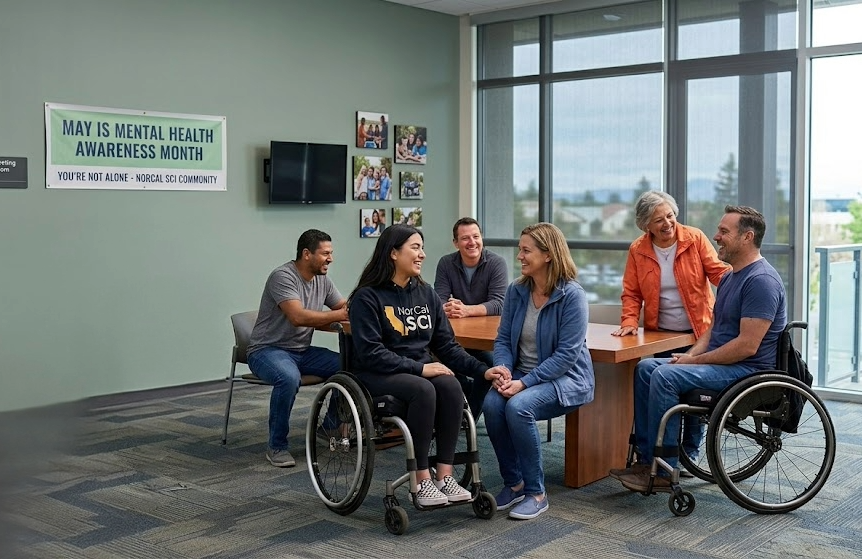
May is Mental Health Awareness Month, and it is the perfect time to talk about something that is just as important as physical rehab: your emotional well-being. When a spinal cord injury happens, life feels like it has been turned upside down overnight. In those early days, so much energy goes into medical milestones that your mental health can easily get pushed to the side. But the emotional shock is just as real as the physical one. It’s okay to feel overwhelmed or lost, and recognizing that mental health starts on day one is a vital part of the healing process.
As you transition back home, that initial shock often turns into a search for a "new normal." This is usually when isolation starts to creep in, which is why finding your people is so important. Every Friday at 6pm, we host a weekly “Happy Hour” group, which offers a soft landing spot where you don’t have to explain the "how" or "why"—people just get it. Whether you are venting about a rough day or celebrating a win, having a community that understands the daily grind helps keep your head in a good place.
We also know that an SCI doesn't just happen to one person; it affects the whole family. Caregivers are often the unsung heroes, but they carry a heavy emotional load. In fact, research from the American Psychological Association (APA) shows that unpaid caregivers are three times more likely to deal with anxiety or depression than non-caregivers. With nearly 66% of caregivers reporting at least one adverse mental health symptom, it is clear how easily burnout can happen. That’s why we emphasize our caregiver support groups. It’s a dedicated space for them to take off the "brave face" and get some support for themselves. You can sign up for the Zoom sessions HERE.
Sometimes you might need something more personal than a group, which is where our peer mentoring comes in. There is something incredibly powerful about talking one-on-one with someone who has walked this path for years. Our mentors aren't just there to give advice; they are there to show you the ropes and help you build the confidence to tackle your own goals. It’s about having a friend who has been there and can help you navigate the tricky parts of life with a little more ease and perspective.
Mental health isn't a "one and done" task; it’s something we check in on for the rest of our lives. Even years down the road, new challenges can pop up that catch you off guard. The best thing you can do is stay connected and know that you don't have to figure it all out alone.
We’ve put together a resources page for local peer groups so you can find a community right in your backyard. We’re all in this together, and the support you need is always within reach.
If things ever feel truly unbearable, please remember that the Suicide & Crisis Lifeline is available 24/7 by calling or texting 988.
