
Adaptive Equipment & How to Make Camping Accessible for Everyone
By Arash Bayatmakou, NorCal SCI Executive Director
With summer just around the corner, the time is right to get out into nature and enjoy the outdoors and one of the best ways to do so is by car camping. And if you’re a wheelchair user and think that camping is out of the question, think again.
Fast Company magazine just published that the North Face recently released a new line of adaptive camping gear all meant for people with limited mobility and hand dexterity. As someone who’s always had to find ways to adapt to the existing equipment that was out there and never thought that a mainstream brand would market to us, I’m thoroughly impressed with this selection of sleeping bags, tents, and other camping essentials that the North Face has designed. (Bonus points to them!)
I started camping as early as I can remember. Our family vacations consisted of my parents and me packing up our little van and heading to the Sierras – usually Tahoe, Yosemite or other mountainous national parks/forests in California – and spending a few days hiking, playing in lakes, and enjoying that extra special feeling of waking up to the sight of towering trees outside the tent and the smell of pine needles and campfires.
After I was injured in 2012, I thought that I might never camp again but it wasn’t long before I decided that I absolutely had to reintegrate this activity into my life.
Since then, I’ve been camping over a dozen times in a variety of locations and find it so satisfying that I found a way to make it work and I can still get outside.
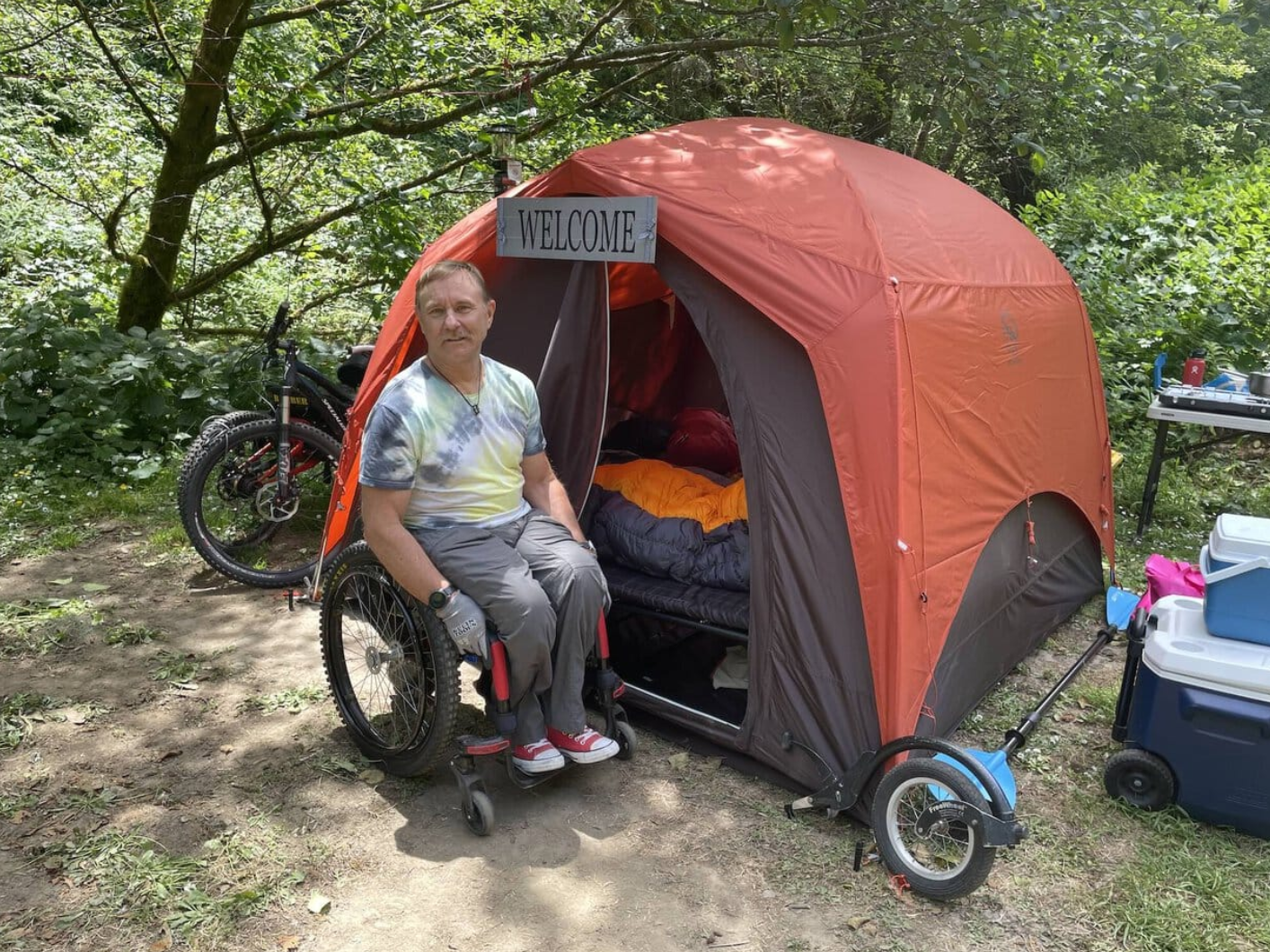
Camping at Pipi Campground, El Dorado National Forest
I want to encourage others in the SCI community to try it so here are some of my top tips and suggestions if you’re curious about trying camping and don’t know where to start:
National Parks, National Forest, and State Parks abide by the ADA and thus have to have accessible camping sites and bathrooms. These often have paved driveways and sites for better wheelchair access as well as cutouts at picnic tables and accessible bathrooms/stalls and roll-in showers with transfer benches.
The quality can vary site by site, but I’ve found CA State Parks to often have very accessible facilities in some of the most beautiful locations in our state.
A couple of my favorites are DL Bliss and Sugar Pine Point in Tahoe and Calaveras Big Trees in Arnold.
Gear is important but if you have help and are flexible, you can make most things work. If you can do a wheelchair to floor transfer, then you can make any tent work. Another option is if you have a hatchback or SUV, to lay down your backseat and set up your bed in the back of your car. It’s warmer (hello high altitude and colder locations!), it’s an easier transfer from your chair (just leave it outside) so just crack a window for fresh air and you’re all set!
Gear can be expensive but there are options to rent instead of buy. If you live near a Sports Basement, you can rent literally everything you need for a camping trip and then decide if you want to invest in something specific.
I recommend a larger and more comfortable mattress instead of the roll-up air mattresses I used to use for backpacking. Here’s a VERY comfy option you can rent or buy that will have you dozing away under the stars. There are also all kinds of camping cots that can make transfers much easier.
Start small and nail down the logistics! Try pitching your tent and spending a night in a backyard or familiar property. Based on that, you’ll know what your needs are and how to plan your next trip.
Still not convinced? Remember that camping is SUPER economical! Campsite fees vary but are generally in the range of $20-$40 per night. So you can visit some of the most expensive and exclusive places (here’s my sneaky trick for staying in the heart of the Napa Valley for relative pennies) and pay almost nothing compared to hotels and airbnbs.
So get out there and get camping! You won’t regret it.