Finding Your Fit: A Regional Guide to Accessible Fitness Across Northern California
Disclaimer: The facilities, programs, and resources listed in this article are provided for informational purposes only. Inclusion in this guide does not constitute an endorsement or recommendation. Please consult with your physician or qualified healthcare provider before beginning any new exercise routine to ensure it is safe and appropriate for your specific medical needs and level of function.
September is National Spinal Cord Injury Awareness Month, an annual observance dedicated to raising awareness, promoting independence, and emphasizing the importance of lifelong health and mobility. For individuals living with a spinal cord injury, taking stock of personal physical wellness often means finding an accessible, welcoming place to exercise.
The ideal workout environment depends heavily on your specific functional goals, the level of physical assistance you require, and your monthly budget. Some individuals thrive in dedicated neuro-recovery centers filled with adaptive machinery and specialized trainers, while others need an affordable space with broad floor layouts, good matting, and accessible dumbbells for independent transfers.
Across Northern California—stretching from the Oregon border down to the Central Valley north of Kern County—accessible fitness options span a wide range of styles and price points. While this is not an exhaustive list, we’ve provided an extensive overview of well-regarded facilities, adaptive sports programs, and inclusive community spaces. Here is a breakdown of how the landscape takes shape across eight distinct regions.
1. The Far North: Community Hubs and Regional Care
(Shasta, Siskiyou, Humboldt, and Trinity Counties)
In the vast timber and mountain corridors of Northern California's upper reach, specialized paralysis facilities are few and far between. Finding accessible movement here relies on a blend of outpatient therapy hubs and well-maintained general fitness centers.

Redding serves as the primary regional anchor. Facilities like The Rose Center stand out by combining clinical physical therapy with a dedicated, wheelchair-accessible workout space designed for long-term neurological conditioning. Beyond Redding, community members often turn to hospital-affiliated wellness centers and broad-layout commercial chains like Planet Fitness. Modern Planet Fitness locations feature spacious floor layouts, flat roll-in entry points, and low-cost memberships that make basic dumbbell and mat work accessible without a high price tag. Additionally, keep in mind that even with fewer choices, you always have the option of joining Staying Driven Wheelchair Fitness online for free!
2. Sacramento Valley & Capital Region: Dedicated Neuro-Fitness Hubs
(Sacramento, Yolo, Placer, and El Dorado Counties)
The greater Sacramento area hosts one of the most concentrated networks of spinal cord injury resources in the state, offering options for high-intensity activity-based therapy as well as adaptive group fitness.
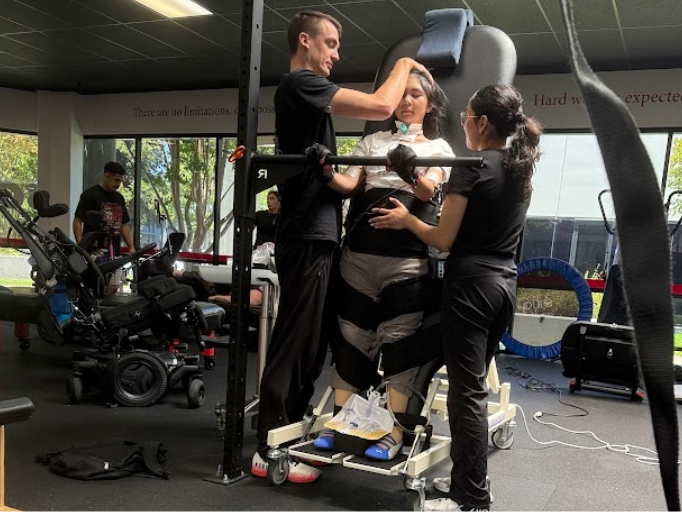
Leading the space in specialized exercise is SCI-FIT Sacramento. Built specifically for individuals with paralysis, this activity-based facility replaces traditional gym machinery with functional electrical stimulation (FES) cycles, bodyweight-supported treadmill systems, and trainers educated in spinal cord injury mechanics. For those looking for structured group environments or personal training tailored to physical mobility, Special Strong in Folsom provides adaptive personal training programs. Meanwhile, facilities like the UC Davis Campus Recreation Center offer excellent inclusive options for community members seeking accessible strength equipment, upper-body ergometers, and accessible pool facilities within a traditional university setup.
3. Sierra & Lake Tahoe Basin: Mountain Recovery and Adaptive Sports
(Nevada, Placer, and El Dorado Counties – Eastern Slopes)
Mountain towns pose inherent terrain challenges, but the Tahoe region has built a world-class environment for adaptive fitness and recovery—largely powered by dedicated sports foundations.
In Truckee, the CR Johnson Healing Center (operated by the High Fives Foundation) functions as a 10,000-square-foot recovery hub designed specifically for adaptive athletes and individuals recovering from mobility injuries. The facility blends adaptive exercise equipment with personal training, physical therapy, and a supportive community atmosphere tailored toward building independent strength. Down on the lake, organizations like Achieve Tahoe complement indoor conditioning with outdoor adaptive sports, providing specialized gear and instruction for adaptive kayaking, paddle sports, and winter sit-skiing.
4. North Bay: Specialized Exercise and Coastal Recreation
(Marin, Sonoma, Napa, and Solano Counties)
The North Bay blends coastal living with direct access to specialized neuro-rehabilitation and regional adaptive sports networks.

Residents looking for specialized adaptive machinery can turn to SCI-FIT Petaluma, which brings FES bikes, gait training equipment, and specialized paralysis specialists directly to Sonoma County. For broader recreational access, the region connects seamlessly into the Bay Area Outreach & Recreation Program (BORP) network. While BORP's physical headquarters sit across the bay, their adaptive fitness consultations, virtual workout programs, and regional sports programs remain vital lifelines for wheelchair users throughout Marin and Sonoma.
5. East Bay: High-Tech Rehabilitation and Adaptive Sports
(Alameda and Contra Costa Counties)
The East Bay sits at the intersection of technological recovery facilities and long-standing community-driven adaptive sports programs.
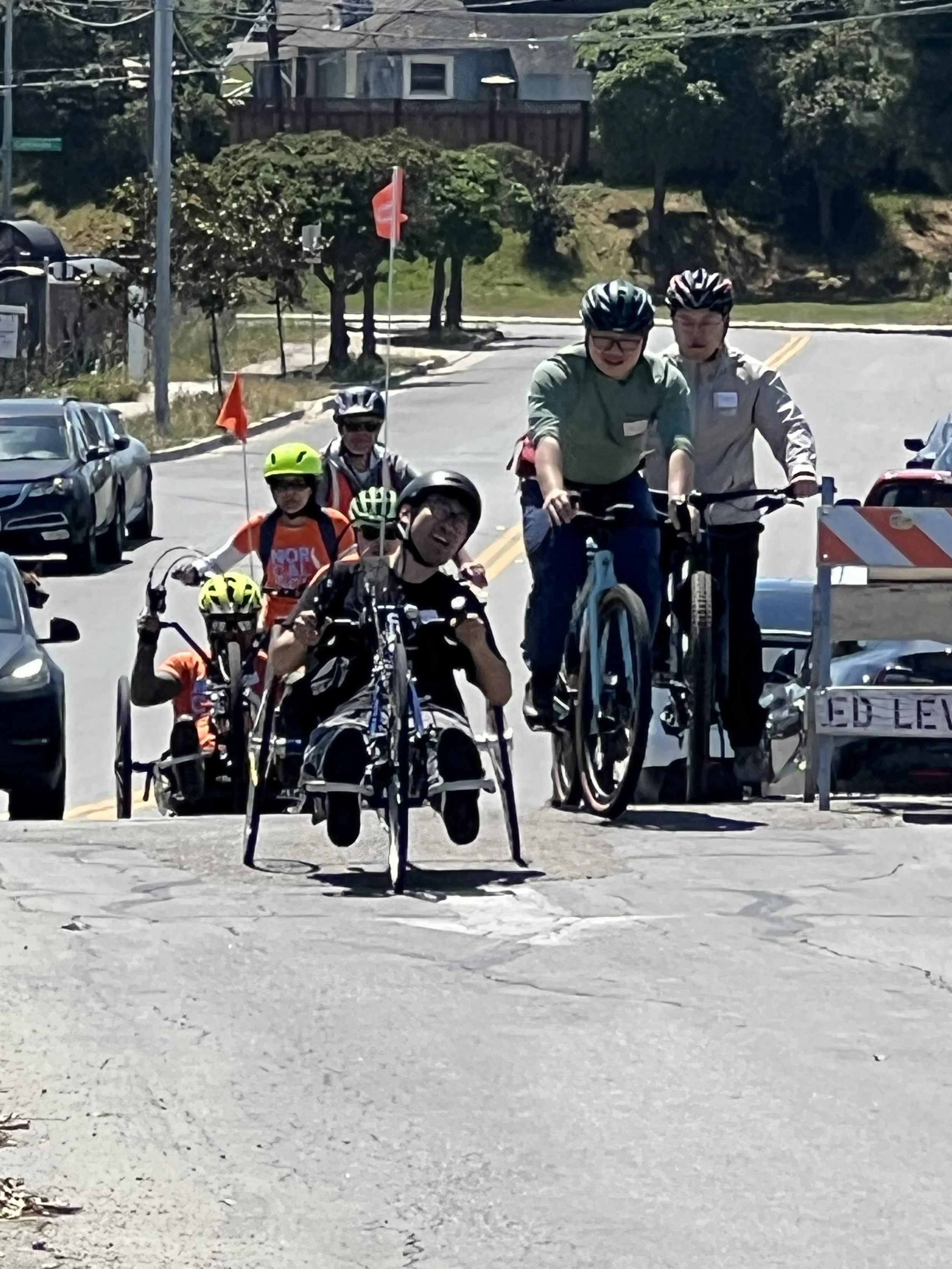
In Dublin, SCI-FIT operates one of its core Northern California training facilities, offering activity-based recovery designed to challenge paralyzed muscle groups through guided exercise and FES technology. For adaptive athletics, the BORP Fitness Center near Berkeley provides an adaptive gym environment, complete with specialized cardio machinery, strength gear, and entry points into local wheelchair rugby, basketball, and handcycling leagues.
6. South Bay & Silicon Valley: Diverse Options for Every Budget
(Santa Clara and San Mateo Counties)
Silicon Valley offers one of the most varied fitness landscapes in the region, ranging from completely free, hospital-affiliated community gyms to ultra-affordable municipal center passes.
For specialized adaptive equipment, The Movement Center at Santa Clara Valley Medical Center (SCVMC) in San Jose provides a dedicated evening exercise gym specifically for individuals living with a spinal cord injury. Operating at no cost to participants, it features standing frames, HUR pneumatic resistance machines, and Motomed arm and leg ergometers. Nearby, the Timpany Center—operated by San Jose State University in partnership with the county—offers public memberships ($30 per month for gym access) featuring an adapted weight room and a fully accessible, ramp-entry warm-water hydrotherapy pool.
If budget is the primary priority, the City of San Jose Community Center Fitness Rooms offer an annual pass for $100 (or $10 per month) valid across six city community centers, including Bascom and Seven Trees. While these rooms stock standard commercial gym equipment rather than specialized adaptive machines, they are fully ADA-compliant, spacious, and uncrowded—making them ideal for independent exercisers who primarily use dumbbells, cable crossovers, and mat space.
7. Central Coast: Campus Accessibility and Coastal Wellness
(Santa Cruz, Monterey, San Benito, and San Luis Obispo Counties)
Along the Central Coast, adaptive fitness options center heavily around university campus infrastructure and hospital-affiliated wellness centers.
University facilities like the UC Santa Cruz Athletics & Recreation Complex and Cal Poly San Luis Obispo's Recreation Center feature high standards of physical accessibility, offering wide equipment aisles, accessible pool lifts, and upper-body ergometers. Supplementing these campus spaces, regional health systems throughout Monterey and Santa Cruz operate outpatient therapy gyms that host community wellness hours for individuals transitioning out of formal physical therapy routines.
8. Northern Central Valley: Regional Centers and Valley Accessibility
(San Joaquin, Stanislaus, Merced, Fresno, Madera, Kings, Tulare, and Northern Kern Counties)

Spanning the vast agricultural corridor of the Central Valley down to the northern edge of Kern County, fitness choices range from major clinical centers to wide-layout health club chains.
In Fresno, San Joaquin Valley Rehabilitation (SJVR) serves as a major regional hub, providing specialized outpatient rehab programs and transitional fitness spaces equipped with neuro-recovery technology. For non-clinical, open-gym adaptive training and outdoor adventure, Central California Adaptive Sports Center (CCASC) offers specialized year-round recreation, while SCI-FIT maintains locations in both Fresno and Modesto to give Central Valley residents access to specialized FES bikes and adaptive strength training.
For day-to-day general conditioning, regional chains like In-Shape Health Clubs have a massive presence across Stockton, Modesto, Fresno, Visalia, and Bakersfield. Their large, single-story layouts, broad floor plans, and accessible pool ramps or lifts provide a reliable commercial option for independent transfer routines.
9. Virtual & At-Home Fitness: Staying Driven Wheelchair Fitness

For individuals who live far from specialized neuro-recovery centers or who prefer exercising from home, virtual adaptive fitness offers a convenient and flexible solution. Staying Driven Wheelchair Fitness provides live, interactive online workout classes designed specifically for wheelchair users and adaptive athletes. Led by Coach Steph Roach and a team of experienced adaptive fitness coaches, these one-hour sessions focus on functional movement, strength building, and peer encouragement. By bringing tailored instruction directly into your living room, Staying Driven ensures that location and travel limitations never stand in the way of maintaining a consistent workout routine.
A strong proactive wellness plan isn't about overhaul overnight; it is built on small, intentional adjustments to your daily routine. By staying ahead of joint strain, managing energy demands, and listening closely to systemic signals, you protect your independence and overall quality of life for the long haul. Take time this National Wellness Month to evaluate what your body needs today, make the necessary tweaks, and keep moving forward on your terms.
