
Exploring Completely Quadriplegic: A Dedicated Resource Built by Cassandra Brandt
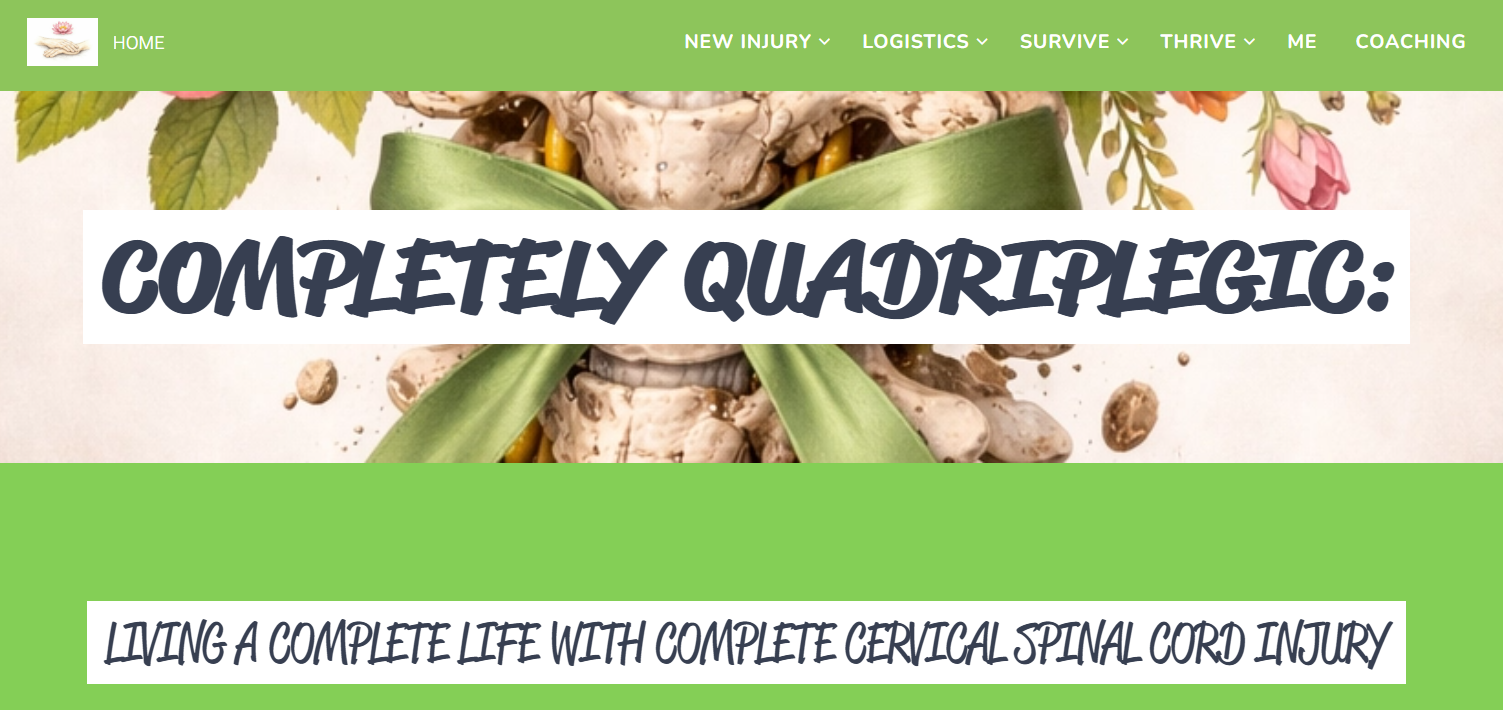
Navigating life after a high-level spinal cord injury brings unique, complex challenges—from managing care in the first month post-injury to building a fulfilling daily routine. We are excited to share Completely Quadriplegic (completelyquadriplegic.com), a space designed to support quadriplegics, their families, and their caregivers through every stage of the journey.
Completely Quadriplegic organizes essential resources into four clear areas:
New Injury & Rehabilitation: Clear guidance on understanding diagnosis levels, acute care, and what to expect during inpatient rehabilitation.
Surviving & Body Maintenance: Practical information on secondary health complications, emergency concerns, bowel and bladder routines, and medication management.
Logistics & Advocacy: Essential support covering government benefits, grants, housing adaptations, homecare, and legal considerations.
Thriving: Real-world insights on mental health, parenting with paralysis, dating and relationships, returning to work or school, adaptive technology, and recreation.
This platform was created by Cassandra Brandt, a C3-4 complete quadriplegic, author, advocate, and former structural steelworker. Living with complete quadriplegia for over eleven years, Cassandra earned her master’s degree, published four books, and established a coaching business—all without the use of her hands.
Driven by her own experience and the power of peer mentorship, Cassandra built Completely Quadriplegic as a comprehensive, honest guide to show newly diagnosed individuals and their families that life after a spinal cord injury remains deeply meaningful. The website emphasizes living a full life, regardless of your diagnosis.
We encourage you to visit the site, share it across your networks, and explore everything it has to offer. Check it out HERE.
