
Do You Drive? Why It’s the Ultimate Question for Independence After an SCI
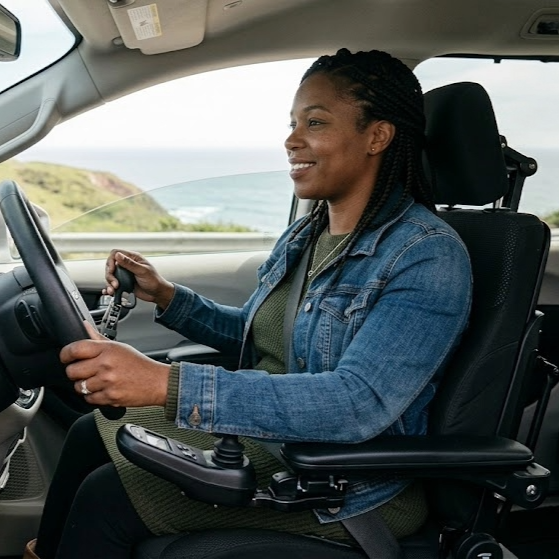
Getting from point A to point B is something most able bodied people take completely for granted. Running out for coffee, rushing to work, or meeting up with friends is just a normal Tuesday. But for individuals in the spinal cord injury (SCI) community, everyday mobility is an uphill battle—and new data shows the gap between them and the able bodied world is actually getting wider.
When you look at the latest numbers from the Bureau of Transportation Statistics alongside long-term tracking from the National SCI Model Systems Database, one major truth jumps off the page: getting back behind the wheel isn't just about convenience. It is the single biggest key to finding a job, gaining financial freedom, and living a happier life.
The Stark "Zero-Trip" Reality
While the able bodied world moves around freely, federal data shows that adults with disabilities take way fewer trips every day. Even more alarming is what experts call the "zero-trip" reality. In 2022, a staggering 40% of disabled adults aged 18 to 64 did not leave their homes at all on the day they were surveyed. That number is up from 34% just a few years prior.
To deal with a world that isn't built for them, roughly 60% of disabled adults say they actively cut back on their daily travel. Instead of just hopping in the car whenever they want, they have to rely on family for rides, restrict their driving to daytime hours, or deal with the rigid, frustrating schedules of specialized transit vans like Dial-A-Ride.
The Driver’s Seat: A Direct Line to a Paycheck
Staying home isn’t a choice—it’s what happens when public transit is broken and getting back behind the wheel after an injury feels impossible. National tracking shows that only about 36% of people living with a spinal cord injury successfully return to the road by driving an adapted vehicle.
Unsurprisingly, that number changes drastically depending on the type of injury. Nearly half (47%) of individuals with paraplegia (lower-body paralysis) return to driving, while that number drops to just 12% for those with higher-level cervical injuries like tetraplegia or quadriplegia (paralysis affecting all four limbs).
But for those who can make the leap back to driving, the payoff is life-changing. There is a massive, undeniable link between driving a modified car and getting back to work:
The Double Odds: Individuals with an SCI who drive are nearly twice as likely to have a job compared to those who don't drive.
The Wheelchair User Divide: When looking strictly at full-time wheelchair users, a massive 81% of those who actively drive are employed. For non-drivers, that number plummets to a heartbreaking 24%.
This directly matches the broader national data, which points out that while over 80% of employed, able bodied adults work full-time, only about 56% of employed adults with disabilities can do the same.
The Three Massive Roadblocks Keeping People Stuck at Home
If driving is such a vital bridge to a regular job and a better life, why are 64% of Americans with an SCI left in the passenger seat—or stuck at home? The data points to three massive hurdles:
Medical Issues (38%): Severe muscle spasms, chronic nerve pain, or medication side effects frequently make driving unsafe.
Anxiety and Lack of Training (17%): Navigating heavy traffic using specialized hand controls causes serious anxiety, especially since there is a major shortage of driving instructors who know how to train adaptive drivers.
The Mind-Boggling Cost (13%): While basic hand controls are relatively cheap, high-tech vehicle setups are brutally expensive.
For a community where an accessible vehicle costs a small fortune, being priced out of a modified car cuts off a massive lifeline to the outside world.
Putting Numbers Behind the Daily Struggle
These statistics simply put hard facts behind the frustrations that individuals with SCIs and their caregivers live out every single day. True independence requires more than just public transit or specialized rideshare programs to patch over the holes.
Until adaptive driving equipment becomes affordable and public transportation gets a major overhaul, thousands of individuals will remain locked out of the workforce and isolated at home.
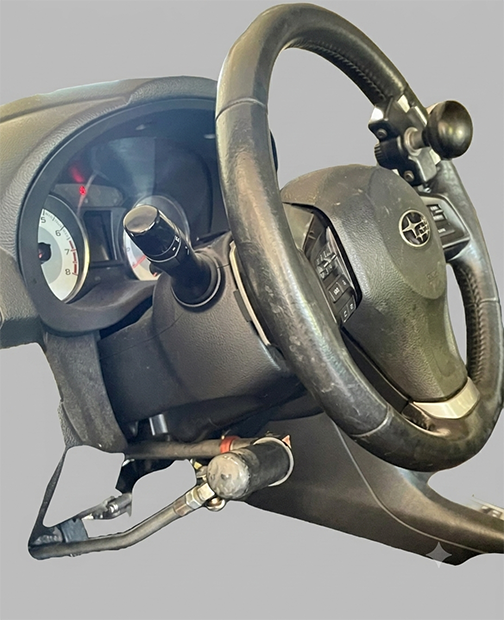
Hand controls like these allow people with limited ability to use their feet and/or legs the opportunity to drive again.
The Road to Recovery Grant from NorCal SCI can help get you back in the driver’s seat.
How We Can Help: The Road to Recovery Grant
We know that the price tag for vehicle modifications is one of the toughest hurdles to clear. That is why NorCal SCI offers the Road to Recovery grant. Thanks to a generous grant from the Craig H. Neilsen Foundation, we can provide qualifying recipients with up to $4,000 to fund vital modifications like hand controls, ramps, and specialized, accessible vehicle equipment to help get you back on the road.
If you are a legal resident of Northern California and need financial help to make your driving goals a reality, find out if you qualify for the Road to Recovery grant HERE.
