
It’s Not Just a Month: We Are Aware of Our SCI Every Single Day
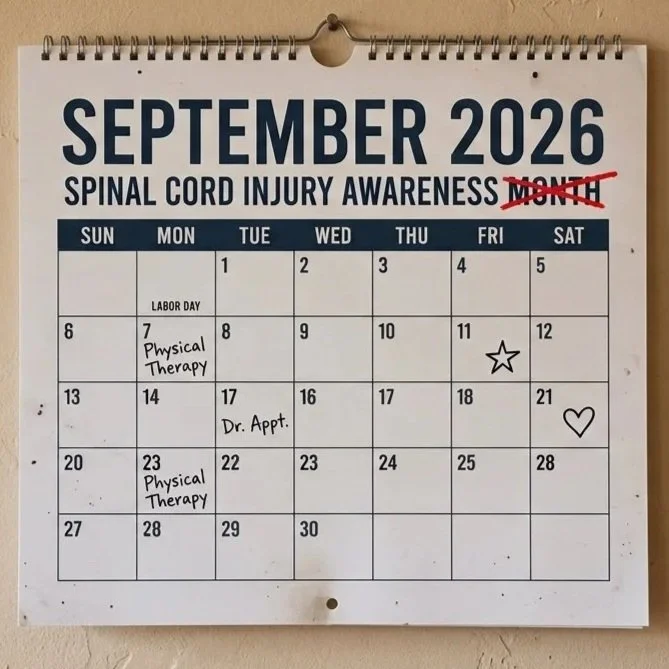
The awareness of a spinal cord injury isn't something that switches on in September and turns off in October. It is present in every transition, every plan, every door frame, every physical movement, and every background thought, 365 days a year.
Having a single month designated to "raise awareness" can feel completely disconnected from that reality. For the general public, September is a brief prompt to pay attention. But for anyone living with a spinal cord injury, it can feel redundant at best—like putting a temporary spotlight on a landscape you navigate every single minute, as if it is something to be observed once a year rather than continuously lived.
Because of that constant, 365-day reality, a quiet misconception exists around the recovery journey: the idea that once you adapt and "see the light," the struggle is permanently over.
The truth is that bad days still happen. Years down the road, a sudden shift in health, an inaccessible event venue, a canceled caregiver shift, or simply waking up on the wrong side of the bed can trigger that familiar sense of exhaustion or frustration.
Having a bad day long after reaching a place of acceptance does not mean slipping backward or losing progress. It simply means being human. Acknowledging that recovery is an ongoing practice rather than a static destination removes the guilt of feeling down when society expects a permanent narrative of triumph.

Navigating the Unseen Grief
When a major injury resets the physical foundation of life, it triggers a profound grieving process. It is not just grief for lost physical function, but for the future that was previously envisioned—the spontaneous road trips, the specific career trajectory, the physical independence, or simply the ease of an uninterrupted morning routine.
This grief rarely moves in a clean, predictable line. It is dynamic and often messy. Denial, anger, and deep sadness can cycle through in a single afternoon. Allowing room to mourn those lost expectations is not a sign of weakness; it is a necessary part of processing a seismic life change. You cannot build a genuine next chapter while pretending the previous one did not end.
Finding the Light at the End of the Tunnel
Gradually, as the trial-and-error of daily navigation yields small victories, a shift occurs. A new rhythm forms. You learn the workarounds, master the logistics, and realize that the core elements of who you are—your humor, intellect, creativity, and drive—remain fully intact. The horizon opens back up, and the future starts to hold genuine promise again.
This is the vital milestone where acceptance takes root, and living fully becomes the priority rather than just surviving. But keeping that light visible during inevitable low points requires intentional effort.
The Science of Turning Outward
When tough days arrive and thoughts begin to spiral inward, one of the most effective ways to break the cycle is intentionally turning focus outward.
This isn't just sentimental advice; it is backed by clinical research. A study published in The Journal of Positive Psychology by researchers at Ohio State University evaluated strategies for managing depression and anxiety. The study compared traditional Cognitive Behavioral Therapy (CBT) techniques—such as tracking and challenging negative thought patterns—against performing simple acts of kindness for others.
The results were striking: while all strategies helped reduce depressive symptoms, performing acts of kindness was the only intervention that significantly improved social connection and life satisfaction while breaking the internal cycle of rumination. Helping others actively shifts the brain out of self-focused distress and restores a sense of agency.
Prolonged internal hyper-focus can turn a bad mood into a trap. Doing something for someone else acts as a circuit breaker. It reframes your role from someone who is managing a difficult situation to someone who possesses valuable capacity, insight, and strength.

Practical Ways to Shift the Focus
Share Practical Wisdom: Offer guidance to someone newer to an injury who is struggling to navigate a specific challenge, whether it is equipment selection, travel logistics, or returning to work.
Engage in Community Action: Lend your time, professional skills, or advocacy to a cause, local group, or peer network.
Practice Small Acts of Connection: Reach out to a friend, check in on a neighbor, or support a family member who is having a tough week.
Shifting the lens away from personal frustration does not erase the real challenges of living with a spinal cord injury. What it does is restore a sense of purpose. By actively contributing to the well-being of others, the weight of a bad day lessens, reminding us that our value lies not in what our bodies can do, but in how we choose to connect with the world around us.
Would you like to get connected to the spinal cord injury community? Check out our calendar of events or send us an email!
