
The Screen Is the New Sidewalk: Why the Latest ADA Update Matters for the SCI Community
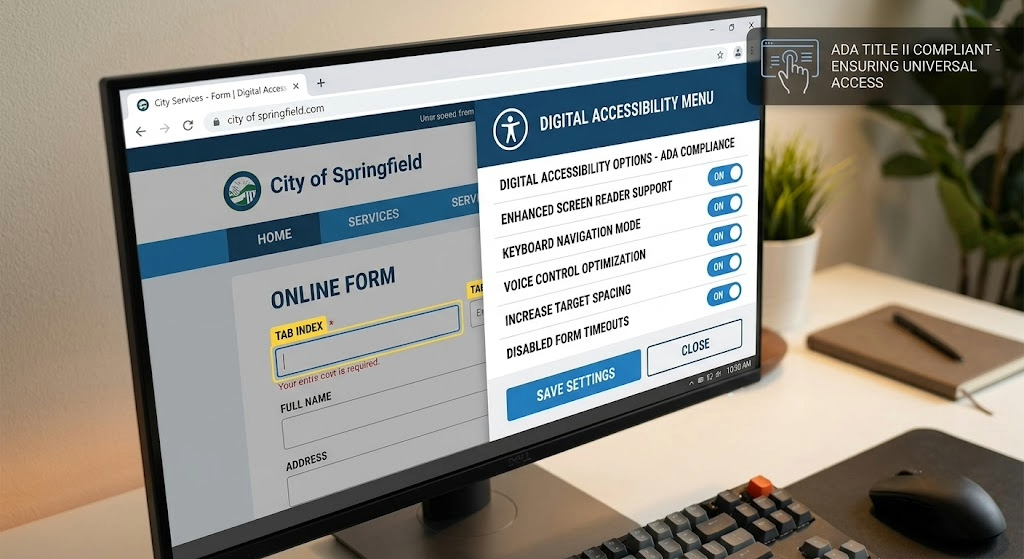
We are nearing the end of Disability Pride Month, and this is the perfect time to celebrate how far we’ve come, but it's also the perfect moment to bust a massive myth. When most people think about the historic Americans with Disabilities Act (ADA) signed back in 1990, they automatically picture physical things like concrete ramps, wide doors, and curb cuts. But the spirit of the ADA didn't stop at the sidewalk. This year, the battle for true equality has officially arrived directly onto our screens, and it is bringing a massive, long-overdue wave of independence straight to the spinal cord injury (SCI) community.
To understand why this is a big deal, we have to look at how we actually interact with the world today. We pay our utility bills online, use mobile apps to schedule city transit, register for community classes, and download local county forms. For anyone living with a cervical injury, limited hand function, or finger stiffness, a poorly coded website is just as impassable as a flight of stone stairs. If a local government app requires high-precision mouse clicks to hit a tiny, crowded button, it forces a completely unnecessary barrier on someone who navigates using a keyboard, mouth stick, sip-and-puff system, or head-tracker.
This leads us to another myth we can bust together. The U.S. Department of Justice issued a powerful, binding update to Title II of the ADA that sets concrete, legal rules for digital spaces, but that does not just mean it helps people with low or no vision. State and local government entities—including every public library system, county court portal, municipal office, and public transit app—must now strictly comply with universal web accessibility standards (specifically WCAG 2.1 Level AA). In short, making a website broken or unusable for adaptive tech is no longer just a minor annoyance; it is officially against the law.
So, what does this actually look like in our daily lives? For starters, it means a massive shift toward larger, clearly spaced interactive targets so you don't accidentally click the wrong link when you have a hand tremor. It also means back-end code must be completely streamlined so you can fluidly "Tab" through a page using assistive switches or voice dictation without getting stuck in a digital loop. Even better, it outlaws those frustrating, unchangeable form timeouts that aggressively boot you off a page and wipe out your data just because you need a little extra time to type out your information.
Ultimately, this digital milestone is the modern-day equivalent of the historic "Capitol Crawl." We are no longer asking for basic digital crumbs; we are demanding total, uncompromised autonomy. By forcing public infrastructure to adopt clean, universal digital design, this new rule ensures that managing your life, interacting with your city, and protecting your health stays entirely in your own hands.
